Somaliland, the country that isn't
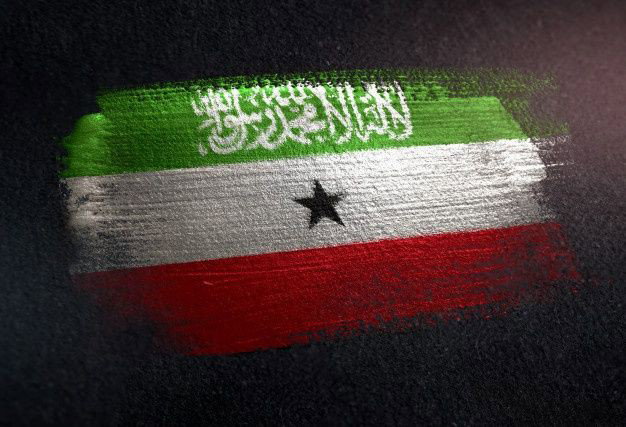
By: Powell Buluma
In an agreement that sparked tensions in the Horn of Africa region, Ethiopia and Somaliland (a breakaway region of Somalia) announced to the world that they had reached a memorandum of understanding. This MoU, agreed upon on January 1st, 2024, granted landlocked Ethiopia access to Somaliland's Port of Berbera facilities and a lease of 20kms of Somaliland's Red Sea coast to Ethiopia and in return, Ethiopia would become the first country to recognize Somaliland as an independent country.
Somalia's response to this agreement was to cite the agreement as an act of aggression and a violation of its sovereignty and territorial integrity. Somalia's reaction was to pass a law nullifying the MoU between Ethiopia and Somaliland which was announced on January 7th, 2024, by Somali President Hassan Sheikh Mohamud. Ethiopia's Prime Minister, Abiy Ahmed, is no stranger to conflicts and wars having had a dispute against Egypt and Sudan over the Grand Ethiopian Renaissance dam and a full-blown war against its own breakaway region of Tigray which ended in November 2022. Going by this precedent, it is unlikely for Ethiopia to back down from the MoU considering access to a seaport has been a priority ever since Eritrea declared Independence in 1993 leaving Ethiopia's remaining territories landlocked.
The history of Somalia and Somaliland is frosty, to say the least. During the colonial era, Britain colonized the region of Somaliland while Italy colonized Somalia. Following Italy's defeat in World War 2, Britain annexed Somalia incorporating the two colonies due to their shared Somali culture. In 1960, Somalia and Somaliland merged to form the Somali republic following a referendum to join the two states. One could argue that the different colonial policies diverged the two states with each forming a distinct identity with the only unifying factor being the shared Somali Culture.
It came as no surprise therefore in 1991 when Somaliland declared Independence in 1991 following the outbreak of the Somali civil war which plunged the country into decades-spanning conflicts. Somaliland has since been able to maintain a steady government and peace which is impressive considering the anarchy that has engulfed the rest of Somalia. Somaliland has spent this time seeking international recognition for its sovereignty but has been undermined all the way by Somalia. Over the 32 years since declaring Independence, Somaliland has earned part recognition from around 35 countries with one of the most notable being the disputed state of Taiwan or officially The Republic of China which has established one of the strongest diplomatic ties with the country.
Somaliland functions as a country in all but name and it might come as a surprise to many why this beacon of stability and peace in an otherwise tumultuous region hasn't been recognised by countries around the world. The answer to this might be rather obvious. Countries have interests, not friendships. Despite Somaliland fulfilling all the criteria for a fully functional independent nation, it is simply not in any country's interest to recognise its Independence. This status quo has only been changed by Ethiopia's relentless pursuit to access a coastline which to no one's surprise, serves Ethiopia's interests. Prior to this Somalia was very content with letting Somaliland act like an autonomous region but if they allow Ethiopia to pursue diplomatic ties with Somaliland, pandora's box might be opened leading to other regions in Somalia splitting away from the federal republic.
Ethiopia and Somaliland's recent agreement is therefore rightly viewed by Somalia as an existential crisis and not merely a diplomatic hurdle. This is why Somalia has been drumming up international support to condemn Ethiopia's actions and undermine Somaliland's autonomy. If this diplomatic manoeuvre works, Ethiopia might be on the receiving end of economic sanctions which would have dire effects on one of Africa's fastest growing economies. Somaliland on the other hand, is already politically isolated from the rest of the world with most policies being implemented by the federal government in Mogadishu. This has and will remain Somaliland's greatest Achilles heel for without the political ability to self-determination, they will remain at the mercy of the government in Somalia.
Readers are at liberty to fully assess the ongoing diplomatic spat in the horn of Africa and make an informed judgement. Few things in life are seldom black and white and both sides have valid arguments which must by acknowledged though not necessarily agreed with. Until an agreement is reached upon, Somaliland will probably for the foreseeable future remain, the country that isn't.
