The Last British Colony in Africa has Finally Been Granted Independence.
Author: Powell Buluma.
In today's world, the European age of colonisation is seen as a distant chapter in humanity's story, locked away in the annals of history. When we think of African Independence, there is a consensus that Africa achieved decolonisation by 1990 with Namibia's independence. It might therefore come as a surprise to many when on the 3rd of October 2024, the United Kingdom announced that they were handing back the Chagos Islands to Mauritius. This came after 13 rounds of talks were carried out between the two nations following Mauritius' successful calls for sovereignty were recognised by the International Court of Justice (ICJ) and the United Nations General Assembly in 2019 and 2021 respectively.
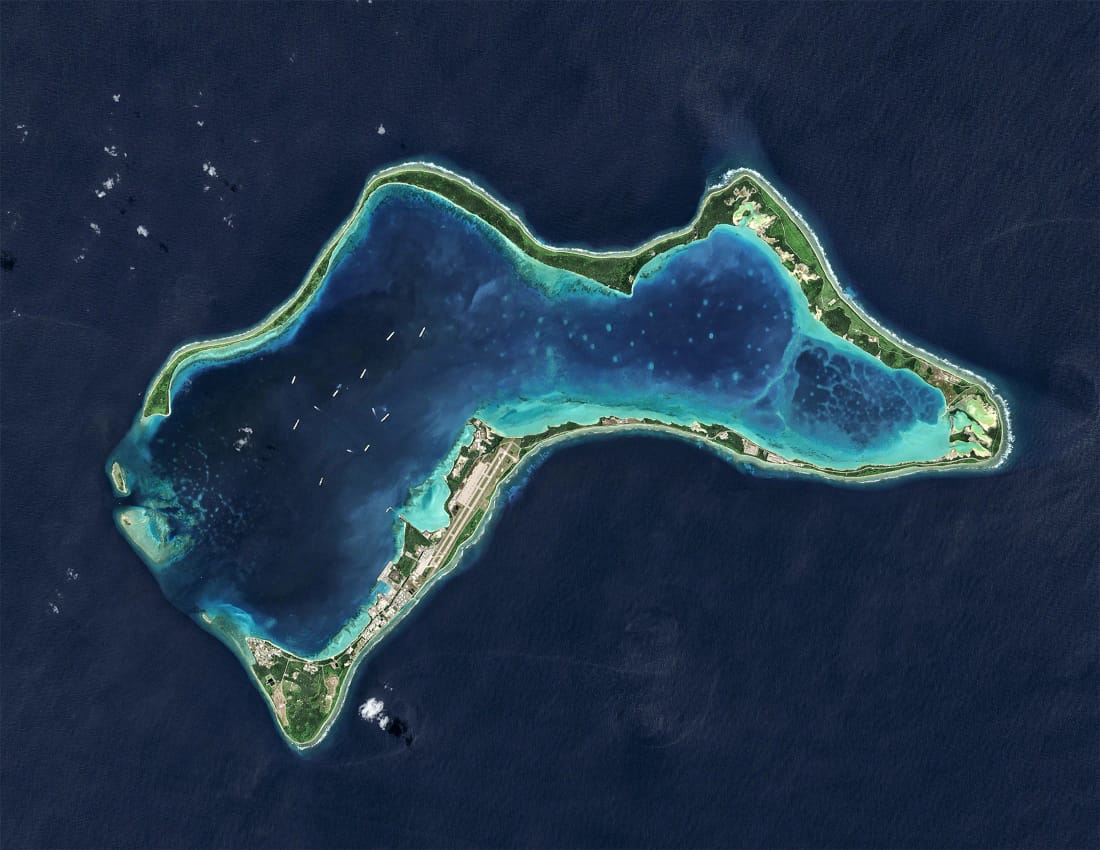
First and foremost, most people have never heard of the Chagos Islands let alone its location. The Chagos Islands are an archipelago consisting of seven atolls found near the dead centre of the Indian Ocean about 500 kilometres from the Maldives which are about just as far from India. The Islands' inhabitants are known as the Chagossians and over multiple centuries have encountered various European powers lay claim to the islands. The victorious of these was the British who acquired the Islands officially from the French under the Treaty of Paris following Napoleon's defeat in 1814. In 1903, the Islands were administratively separated from the Seychelles and attached to Mauritius, where Mauritius' claim to the islands originates. The ICJ held that as Britain granted Independence to Mauritius in 1968, it unlawfully separated the Chagos archipelago to form a new colony named the British Indian Ocean Territory. The British later leased the largest Island Diego Garcia to the United States Military who duly converted it into a military base used for US military projection in the wider region. The islands were home to between 1500-2000 Chagossians who were between 1967 and 1973, evicted and expelled from their homes and relocated from the islands in order to pave the way for the military base. The UK, according to news reports, fabricated claims that the Islands had no permanent inhabitants despite the Chagossians having lived there for centuries.
Initially, the UK dismissed the ICJ ruling as merely being advisory in nature but due to increasing global pressure and risk of isolation, the UK agreed to open talks with Mauritius in order to return the islands. The key condition pertinent to an agreement being reached would allow the joint UK-US military base at Diego Garcia atoll to continue operations on a 99-year lease. The Chagossians received this news with mixed emotions. Olivier Bancoult, the Chairperson of the Chagos refugee group, described it as “a big day.” He further added “This has been a long struggle lasting more than 40 years and many of our people have passed away,” having gone to court on several occasions since 2000 challenging the UK's sovereignty over the islands. “But today is a sign of recognition of the injustice done against Chagossians who were forced to leave their homes.”
The Chagossians were not consulted in any of the talks between the UK and Mauritius and their attempts to challenge this failed meaning Chagossians were still not given self-determination concerning their own future and home islands. The lack of inclusion was voiced by a community organisation called Chagossian Voices in an announcement: “Chagossian Voices deplore the exclusion of the Chagossian community from the negotiations which have produced this statement of intent concerning the sovereignty of our homeland. Chagossians have learned this outcome from the media and remain powerless and voiceless in determining our own future and the future of our homeland. The views of Chagossians, the Indigenous inhabitants of the islands, have been consistently and deliberately ignored and we demand full inclusion in the drafting of the treaty.
Though there are certainly challenges in the future, the withdrawal of UK sovereignty over the Chagos Islands is welcome. Mauritius can, however, not afford to sideline the opinions of Chagossians concerning their own home islands. All peoples on earth have the right to self-determination enshrined in the Declaration on the Right to Development which includes, the exercise of their inalienable right to full sovereignty over all their natural wealth and resources. In the words of the 14th Dalai Lama, "Peace can only last where human rights are respected, where the people are fed, and where individuals and nations are free." Thus, in order to ensure lasting peace, Chagossians' rights must be respected and their values upheld in this new country they are about to find themselves a part of.
